Despite over 300 million people globally living with a rare disease, patients often wait nearly five years for a confirmed diagnosis. In the UK alone, only 5% of rare diseases have an approved treatment.
Even with years of investment and research, the pipeline meant to address this continues to fall short, with only 6% of drugs that enter clinical trials ever reaching patients. Increasingly, drug manufacturers and non-profit organisations are turning to repurposing – finding new uses for existing drugs – as the most viable way to close that gap. This is due to challenges in identifying potential treatments across thousands of conditions, a process that can be slow, expensive, and largely based on guesswork.
The obstacle to faster discovery is not a lack of data. Decades of research exist across lab notes, clinical results, and internal databases – but it is deeply fragmented, distributed across disconnected systems and sources. Critical links between a drug’s known mechanism and the need for an unmet disease go unnoticed, and no researcher can feasibly connect the dots across thousands of compounds, genes, and conditions alone – meaning promising treatments are routinely missed.
This is where graph technology is a critical enabler, bringing biomedical data together to uncover previously hidden links between compounds and conditions to unlock faster treatment pathways for the patients who need them most.
Where data becomes knowledge
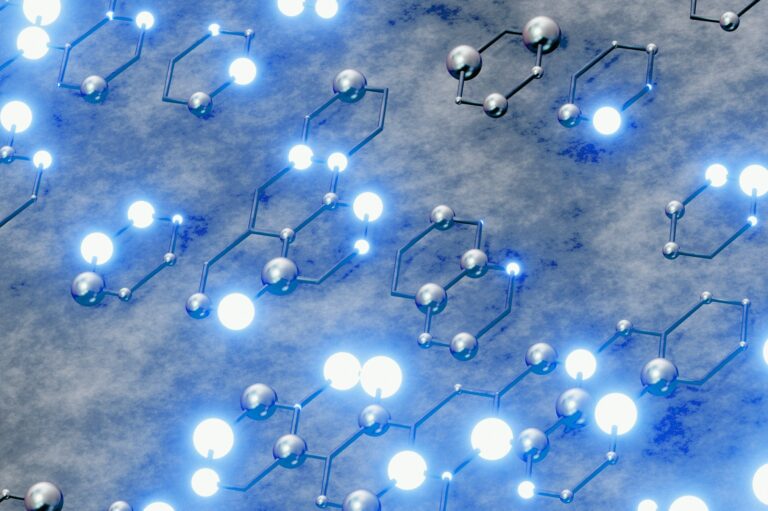
Graph databases put isolated data into context. Instead of storing data in tables with rows and columns, graph databases link it in a network, the so-called “knowledge graph”. The nodes of the network contain data information on a wide variety of objects, sometimes referred to as entities. These entities can be enriched with any number of properties from different sources. The connections between the nodes – the so-called edges – store information about these entity relationships – in other words, about their context.
Graph intelligence is redefining what is possible in drug discovery by making sense of what already exists, rather than starting from scratch.
Instead of storing simple facts such as “Gene A causes disease B”, a knowledge graph captures the context, for example: “Gene A could cause disease B according to a study, based on specific experimental results, with a confidence score of 0.7”. It transforms isolated data into real knowledge that allows AI to discover insights that would otherwise remain hidden and are comparable to human “aha moments”.
Graph intelligence in action
Organisations are now applying graph intelligence at scale, with results that would have been impossible through traditional research methods alone.
The Rare Hopes initiative is mapping billions of relationships between genomic information, signalling pathways, and drug data to surface treatment hypotheses. The system can detect that a drug has a specific effect on a biological pathway crucial for a rare disease, even if it was never developed for that purpose. In one instance, this revealed that a drug developed for bone marrow cancer may also hold potential against Carney complex – a rare disease that, until that point, had no viable treatment pathway.
Graph data science at work
When repurposing medicines, knowledge graphs, graph data science, machine learning, and AI work together across every stage of the discovery process. For example, the PageRank algorithm, originally developed to rank web pages but now widely applied across complex network analysis, for instance, identifies and ranks the genes most strongly associated with certain diseases – bringing statistical rigour to what was previously a manual and incomplete process.
The implications for safety testing are also just as significant. By mapping relationships between drug candidates and potential side effects, graph technology can mathematically identify safety risks before a single animal or human experiment takes place – compressing timelines and reducing costly late-stage failures.
At the Dr. von Hauner Children’s Hospital in Munich, the Care-for-Rare Foundation uses a clinical knowledge graph to connect 2,500 paediatric patients to more than 8,000 rare diseases. By applying algorithmic analysis to cross-reference genomic, proteomic, and clinical data – a feat that would be impossible to join in a traditional database – the system can mathematically surface the causal links that lead to a diagnosis. For children, where every month without a diagnosis matters, that is the difference between timely treatment and irreversible decline.
Ultimately, the knowledge graph serves as a ground truth layer for AI, anchoring its outputs in verified, contextualised data that substantially reduces the risk of hallucinations. In a field where a single erroneous connection could send researchers down a wrong path, that reliability is fundamental.
From fragmented data to medical breakthroughs
For too long, the data needed to transform rare disease treatment has existed in isolation – fragmented across systems, disconnected from the insights it could generate. Graph intelligence is redefining what is possible in drug discovery by making sense of what already exists, rather than starting from scratch.
When decades of research are connected into a single knowledge layer, relationships emerge that no individual database could reveal. A drug developed for one disease may share a pathway critical to another; a failed clinical trial may contain the seeds of a viable new hypothesis.
For the 300 million people living with a rare disease, that is a profound shift. While the data to help them has long existed, graph intelligence is the antidote to decades of fragmented research.

Dr. Alexander Jarasch
Dr. Alexander Jarasch is Global Head of Pharma & Life Sciences Solutions at Neo4j, where he helps organisations harness graph technology, AI and machine learning to unlock value from complex data.