
When we talk about what determines how long we live, and how well for that matter, we often mention things like genetics, diet, lifestyle, environment, even luck. All of these have good grounding in science and are well accepted as determinants for a long, healthy life, but there is another variable that has become just as powerful, and far less discussed: wealth. Not because money changes your DNA, but because it changes what happens next. It changes who monitors you, who catches the early signs, who adjusts your treatment before something goes wrong. For those with access to the best care, prevention is a lived reality. But for the majority of people, it remains only an aspiration.
Nowhere is this more visible than in cardiovascular health. High blood pressure, or hypertension, is the single biggest driver of strokes and heart attacks worldwide. It affects around one in three UK adults and is largely silent, largely preventable, and largely under-managed. Our own research, published last year, found that only 47% of the British public properly understand what hypertension means, and more striking still, the gaps in awareness and behaviour tracked almost perfectly with income and education. People from lower-income households were significantly less likely to understand the condition, less likely to have measured their blood pressure recently, and less likely to have made lifestyle changes to reduce their risk. The knowledge exists, the tools increasingly exist, but access to both remains deeply unequal.
This is not a clinical failure, it is a system failure. And it is one that technology is now genuinely positioned to fix, with the right integration.
Why cardiovascular health is ready for transformation
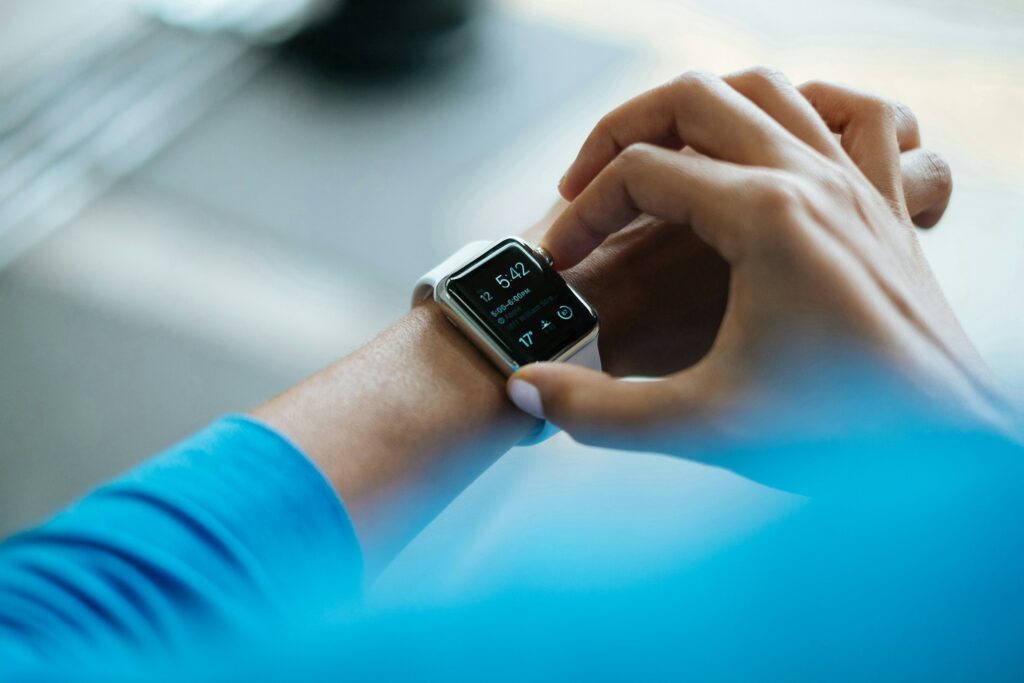
The solution here is already in our hands, literally. Connected wearables are uniquely positioned to address cardiovascular prevention at scale, for two reasons.
The first is the value of early detection. Most cardiovascular conditions are significantly more treatable, or entirely preventable, when caught early. The problem is that early screening at population scale has historically been difficult, expensive and logistically complex. A wearable that monitors blood pressure continuously, passively and accurately changes that equation entirely, and turns a clinical intervention into an everyday behaviour.
The technology will continue to move and advance, the question now is whether the systems built to protect people's health are ready to move with it.
The second is the need for sustained engagement. Managing blood pressure effectively is not a one-time event. Annual check-ups are a useful baseline, but they capture a single moment in time and do little to drive the kind of ongoing awareness that actually changes behaviour. Our data supports this directly: users who monitored their blood pressure continuously with a medical-grade device showed meaningful improvements over time, with older users in particular able to halt the age-related rise in systolic blood pressure that is typically considered an inevitable part of ageing. That is not a small finding. It suggests that continuous, real-time feedback can prompt real and sustained change.
Addressing both early detection and long-term management within a single, everyday behaviour represents a fundamental shift in how prevention can work, and who it can work for.
The network effect nobody is talking about
There is a dimension to this that I think gets overlooked in most conversations about wearables, and it is arguably the most exciting part. When individuals use connected health devices, they contribute to something much larger, rather than just generating data about themselves.
It’s similar to the early days of social networks. The value of the network was not static, but grew as participation grew. Each new person who joined made the system more useful for everyone already in it. The same principle applies to connected health data. When thousands, then millions, of people are continuously monitoring their blood pressure, the aggregated insights that emerge from that data become extraordinary. Patterns that would take decades to identify through traditional clinical research can be seen in near real time. Guidance becomes more personalised, more accurate, more useful for every individual in the system.
This is what I think of as collective medicine. It is a model where the quality of care available to each person rises as more people participate. It is the opposite of the current system, where the best insights and the most personalised guidance are concentrated among those wealthy enough to access elite specialists. Done well, connected wearables do not just help individuals manage their health, they build a shared intelligence that raises the floor for everyone.
The bottleneck is not the technology
Here is the frustrating part: the technology works, consumer adoption is growing, and people who use these tools are experiencing tangible benefits. The bottleneck is not innovation, it is not even appetite, it is policy.
Preventative care generates returns for health systems over five to fifteen years. But political cycles often work in the shorter term. The result is a persistent misalignment between where the evidence points and where public health investment goes. Prevention tools remain under-supported at the system level, not because they lack evidence, but because many of the incentives are built around short-term, visible outcomes rather than long-term population health.
However, there are encouraging signs that this is beginning to shift. In the United States, for example, recent regulatory movement from the FDA has made it meaningfully easier for prevention-focused wearable manufacturers to reach patients. It is not a perfect model, but it signals something important: that regulators can adapt their frameworks to reflect the reality of emerging preventative technologies. Other markets have the opportunity to learn from that momentum rather than wait to follow it.
A collective call to action
Closing the integration gap requires movement from multiple directions at once.
For individuals, the starting point is simply engagement. You cannot act on information you do not have. Wearable data is not about anxiety or obsession, it is about understanding your own body well enough to make informed decisions. Small changes, consistently applied, have a meaningful impact on cardiovascular outcomes, but without visibility, most people are making those decisions blind.
For clinicians, the ask is to take patient-generated data seriously. When a patient arrives with months of continuous blood pressure readings, that is not noise to be dismissed. It is evidence of engagement, and engagement is one of the most clinically meaningful things a patient can demonstrate. Even where debate remains about measurement precision, shutting down that conversation risks closing off one of the most powerful tools available for sustained behaviour change.
For policymakers, the challenge is to align incentives with the evidence. Wearable technology is not a consumer trend. At scale, it can reinforce public health infrastructure. The question is not whether continuous monitoring improves outcomes, as our data suggests strongly that it does, the question is whether the systems designed to protect population health are willing to move fast enough to make use of it.
The opportunity is now
We are at an inflection point. The tools to make cardiovascular prevention accessible, continuous and genuinely equitable already exist. The data to support their use is growing every day. The consumer appetite is there.
What has been missing is the collective will, from policymakers, health systems, and industry, to treat prevention not as a luxury add-on for the health-conscious and the wealthy, but as a baseline right. The technology will continue to move and advance, the question now is whether the systems built to protect people’s health are ready to move with it.

Josep Solá
Josep Solá is Chief Technology Officer at Hilo by Aktiia.