

Artificial intelligence is moving rapidly from experimentation into frontline healthcare. But in the NHS, the central question is not simply what AI can do. It is whether it can be trusted when an inaccurate output could influence how urgently a patient is treated, where they are directed or what information is presented to the clinician responsible for their care.
In most consumer applications, an answer that is plausible but wrong is frustrating. In healthcare, it can contribute to inappropriate prioritisation, missed deterioration, delayed treatment or avoidable harm. It can also create additional work for already stretched clinical teams and quickly undermine confidence in the technology.
The standards applied to healthcare AI must therefore be fundamentally different from those applied to general-purpose consumer tools. Accuracy must be assessed against a clearly defined clinical or operational purpose. Risk must be understood before deployment. Human oversight, accountability and ongoing monitoring must be built into the system from the outset, not added after the technology has gone live.
This is why I believe the future of trusted AI in the NHS will increasingly be built around sovereign, domain-specific models: systems developed for a defined healthcare purpose, informed by trusted UK data, governed within the UK and embedded into the workflows clinicians and patients already use.
Sovereignty is an important part of that trust, but it should not be confused with safety itself. A model can be hosted in the UK and still be inaccurate, poorly governed or deployed inappropriately. Trust comes from the combination of clinical safety, transparent governance, secure infrastructure, rigorous evaluation and clear control over how the technology and patient data are used.
From generic intelligence to trusted expertise
General-purpose large language models have generated extraordinary momentum because of their ability to perform a vast range of tasks. But breadth is not the same as depth.
A model designed to answer questions about almost anything has not necessarily been built to understand the language, processes and risks involved in navigating NHS care. Nor will it automatically understand the operational reality of a GP practice, an urgent treatment centre or a community service.
Healthcare does not simply need a model that can produce a convincing response. It needs a system that understands the context in which a decision is being made, operates within the appropriate governance framework and supports a clearly defined clinical or administrative purpose.
That is why I expect organisations in highly regulated sectors to move increasingly towards smaller, specialist models trained and evaluated for specific uses. These models can be more accurate, more controllable and significantly more cost-efficient than using a large frontier model for every task.
They can also be improved through genuine domain feedback. In healthcare, that means learning from clinicians and the decisions made within real workflows, rather than relying solely on knowledge drawn from the open internet.
"Sovereignty alone does not make an AI system safe. A model can be hosted in the UK and still be poorly designed, insufficiently tested or used for the wrong purpose."
At OneAdvanced, we recently completed a pilot programme with NVIDIA to develop and validate a sovereign AI model for NHS care navigation. Our Care Navigator LLM was trained using a balanced set of pseudonymised patient requests submitted through our Patchs online consultation and triage platform, which handles around 500,000 UK patient interactions each month.
The model was built using NVIDIA Nemotron open models and NeMo libraries. Its weights, fine-tuning, hosting and inference remain within the UK perimeter and are governed under UK law.
In benchmark categorisation tests, the model outperformed the frontier models against which it was assessed and achieved significantly greater accuracy than a GP control group. It also demonstrated inference costs of up to 150 times lower than leading frontier models.
This is an important illustration of what becomes possible when advanced AI infrastructure is combined with trusted data and more than 35 years of healthcare workflow expertise. It is not AI added to healthcare from the outside. It is AI built around a specific NHS challenge, designed to work within established care processes and evaluated against the people and systems already performing the task.
Improving the route into care
Care navigation is a good example of where AI can deliver meaningful value.
For many patients, the route into healthcare remains more difficult than it should be. People may not know whether they need a GP, pharmacist, urgent care service, community provider or another form of support. Requests can arrive with limited information and administrative and clinical teams must then spend time interpreting, categorising and directing them.
If AI can identify the clinical topic within a patient’s request more accurately, it can support the system in asking more relevant follow-up questions and directing that request to the appropriate person or service.
This is not about removing clinical judgement or preventing people from seeing a clinician. It is about giving NHS teams better information earlier, helping them understand patients’ needs more quickly and reducing avoidable administrative effort.
The productivity opportunity comes from improving the flow of work. Better navigation can help reduce inappropriate appointments, duplicate handling and unnecessary movement between services. It can release clinical and administrative capacity while helping patients reach the right care more quickly.
That is a much more useful measure of AI’s value than the volume of content it can generate. In the NHS, productivity is not simply about doing more with fewer people. It is about reducing the work that should not have been necessary in the first place, so that skilled professionals can focus their time where it makes the greatest difference.
The same principle applies to other areas of healthcare. AI can support the summarisation and coding of clinical documents, reduce repetitive administration and help surface relevant information at the point of care. But its value depends on being integrated into the underlying workflow.
Giving clinicians another standalone application or asking them to copy information between systems risks creating additional burden. AI must sit within the flow of work, with appropriate human oversight, clear accountability and the ability to measure whether it is delivering a better outcome.
Trust must be designed in
Sovereignty alone does not make an AI system safe. A model can be hosted in the UK and still be poorly designed, insufficiently tested or used for the wrong purpose.
Trust has to be engineered across the entire lifecycle. That includes the quality and provenance of the data, privacy protections, clinical safety, cybersecurity, model evaluation, ongoing monitoring and clarity about when a human must remain in control.
It also requires transparency about the intended use of technology. A tool designed to support care navigation should be assessed against that purpose, not promoted as a universal solution to healthcare’s challenges.
"For the NHS, the future of AI must therefore be more than intelligent. It must be useful, accountable and worthy of trust."
This is particularly important as AI systems continue to learn and evolve. In our own work, corrections made by GPs can form the basis of future training data, enabling the model to improve through real clinical expertise. However, continuous improvement must itself be controlled and governed. Learning from users should never mean changing a model without oversight, validation or accountability.
Healthcare organisations will increasingly need to ask suppliers more detailed questions: Where is the data processed? Who controls the model? What was it trained on? How has it been evaluated? How does it perform across different patient groups? What happens when it is uncertain? Can its decisions be reviewed? How will its performance be monitored once deployed?
Those questions should not be treated as barriers to innovation. They are what allow innovation to move beyond pilots and operate safely at scale.
A model for other regulated sectors
The principles emerging in healthcare are relevant far beyond the NHS.
Government, education, legal services, financial services and social care all manage sensitive information and make decisions with serious consequences for individuals. In each of these sectors, organisations will need to balance access to advanced AI with control over their data, regulatory obligations and the need for sector-specific accuracy.
This is likely to produce a more diverse AI landscape. General-purpose models will remain valuable, but they will increasingly sit alongside specialist models built for defined tasks and operating within governed environments.
The organisations that create the greatest value will not necessarily be those with the largest model. They will be those with the right combination of technology, trusted data, domain expertise and access to the workflows where real decisions are made.
The UK has an opportunity to lead in this next phase. We have world-class AI expertise, internationally respected institutions and a healthcare system capable of generating enormous public value from responsible innovation.
But success will not be measured by how quickly we can introduce AI into the NHS. It will be measured by whether the technology helps patients reach the right care, gives clinicians more time to provide it and earns the confidence of the public whose data makes that progress possible.
For the NHS, the future of AI must therefore be more than intelligent. It must be useful, accountable and worthy of trust.
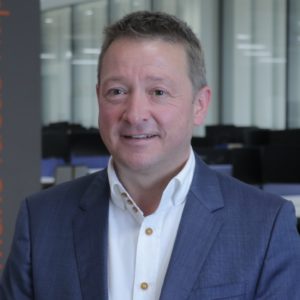
Ric Thompson
Ric Thompson is Senior Vice President for Health & Care at OneAdvanced, where he drives strategy, product innovation, and growth across one of the UK’s largest health technology organisations. With over 25 years’ experience in healthcare and technology, Ric has been a key leader in NHS digital transformation, from pioneering clinical document management solutions with Docman to developing integrated care platforms and AI-driven innovations aligned with the NHS 10-year plan.